





AGRONOMIC RESOURCESTO SUPPORT EVERY SEASON
YOU CAN TAKETO THE FIELD
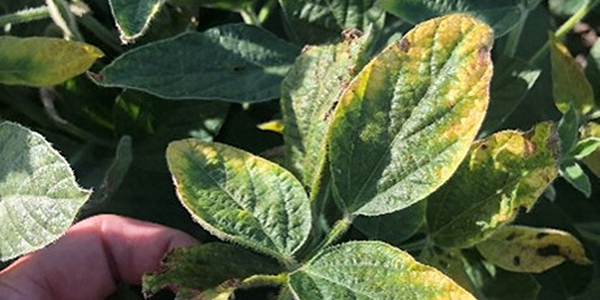
Strategic Plays to Help You Tackle Soybean Top Dieback
It’s late summer—and like most farmers, you’re probably spending time driving down back roads to check the status of your crops.
Soybean leaves aren’t quite as green, and that’s a good sign harvest is closer than you think (better have that combine ready). But if you notice a few patches in your field starting to turn a little earlier than usual, it’s a good idea to investigate. You may have an issue with soybean top dieback.
An Issue With What?
That’s right: soybean top dieback. The issue is not totally uncommon, but it’s elusive and not really understood.
First reported over 30 years ago in Ohio, top dieback can (kind of) present like other problems. The uppermost leaves of the plant turn yellow/brown along the leaf margins, become necrotic, and eventually die and fall off.
The disorder sometimes follows row patterns or can be isolated in certain areas.
Soybean top dieback isn’t always a major issue. But in extreme cases, plants can die prematurely or produce small, shriveled seeds.
That’s no good.
So what is it, what causes it and what can you do to prevent it? Let’s dig in.
What It’s Not (or Probably Not)
As mentioned, soybean top dieback is elusive, so let’s start with what it’s not.
Sudden Death Syndrome: Soybean
SDS often gets blamed for the top dieback “look” in fields. But upon further inspection, the leaf necrosis presents differently. SDS causes yellowing between leaf veins, while top dieback starts on the outer leaf margin.
Potassium Deficiency:
Lack of this macronutrient is an easy scapegoat. But here’s the thing: a K deficiency usually starts showing signs on the lower leaves of the plant, while top dieback shows signs, well, on the top. To make things even more confusing, a potassium deficiency might be part of the problem (more on that in a moment).
What It Is (Maybe)
When soybean top dieback was first described over 30 years ago, the pathologist blamed Phomopsis and Diaporthe fungi as the culprits. The soybean cyst nematode is also a potential causal agent. Yet with all these, not much hard evidence exists to support any “yep, it’s definitely this” statements.
In 2018, researchers at Purdue noted some upper leaf necrosis during seed fill in soils with a K deficiency. But the correlation wasn’t definitive.
So… what does all this mean?
What To Do
Here’s the deal—there are still plenty of questions about soybean top dieback. However, we know it can cause issues. And as your reliable partner in the field, LG Seeds is here to help you prevent top dieback, even with limited available information. So, here are some go-to tips from your go-to LG Seeds team:
- Select LG Seeds soybean varieties with excellent agronomic characteristics. While you’re at it, consider an AgriShield® seed treatment to minimize early-season diseases. Some farmers have noticed fewer top dieback issues on acres planted with treated soybean seed.
- Conduct soil tests regularly to monitor nutrient levels in the field. Although deficiency isn’t the only cause, low K and top dieback are linked, and a comprehensive nutrient management program will help.
- Test fields for soybean cyst nematode pressure and plant soybean varieties with resistance to the pests.
- Manage soil compaction to encourage crop growth, root development and nutrient uptake. Limited water and potassium uptake potential have been linked to soybean top dieback. Manage compaction by utilizing cover crops, tilling or improving soil drainage.
Most importantly, don’t go at it alone. LG Seeds is committed to your success, season after season. We’ll be by your side to help manage and prevent top dieback in your soybeans—so reach out to your LG Seeds agronomist today.



Agronomy Team